
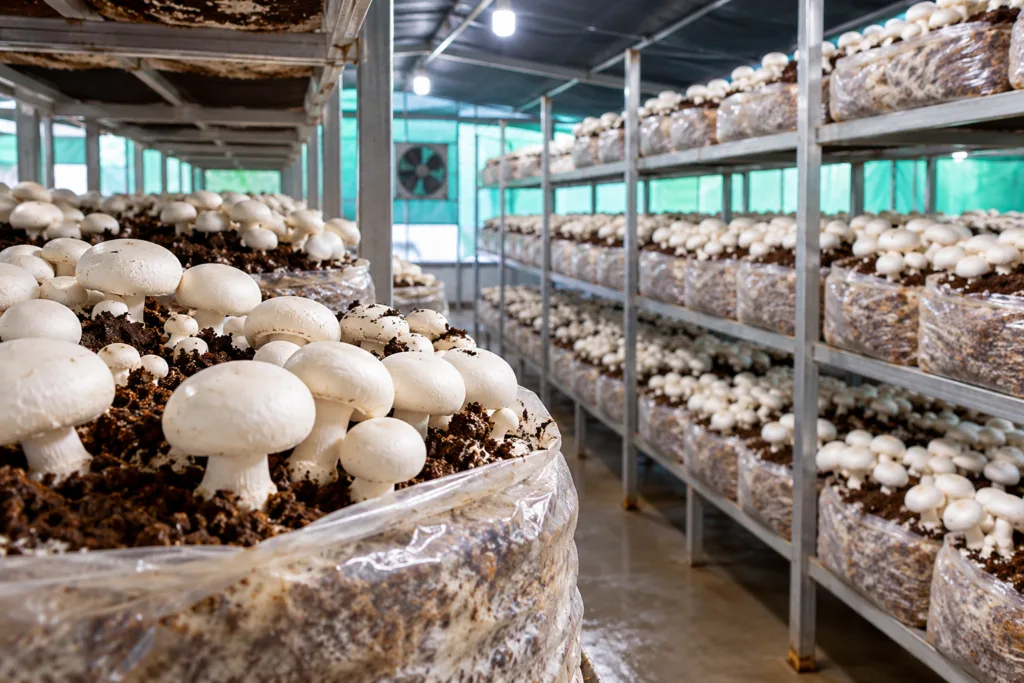
Mushroom farming is one of the most productive and sustainable agricultural practices globally. As saprophytic fungi, mushrooms do not require sunlight or fertile soil to grow. Instead, they thrive by decomposing organic waste material, transforming agricultural byproducts into highly nutritious, protein-rich food. This unique biological process makes mushroom cultivation an exceptional model for circular bioeconomy and sustainable waste management.
For entrepreneurs, biology students, and agricultural enthusiasts, understanding the science and economics of mushroom farming opens up vast opportunities. This comprehensive guide covers everything from the basic biological requirements to the detailed steps of starting a commercial mushroom farming business, with a specific focus on the Indian market.
What is Mushroom Farming?
Mushroom farming is the systematic cultivation of macrofungi under controlled or semi-controlled environmental conditions. Unlike green plants, mushrooms lack chlorophyll and cannot perform photosynthesis. They belong to the kingdom Fungi and obtain their nutrients by absorbing organic compounds from their growth medium, known as the substrate.
The cultivation process involves inoculating a prepared substrate with fungal mycelium (referred to as spawn) and maintaining specific temperature, humidity, and ventilation levels to encourage mycelial growth and subsequent fruit body development. Industrially, this process turns agricultural residues like wheat straw, paddy straw, sugarcane bagasse, and sawdust into edible, medicinal, and commercially valuable products.
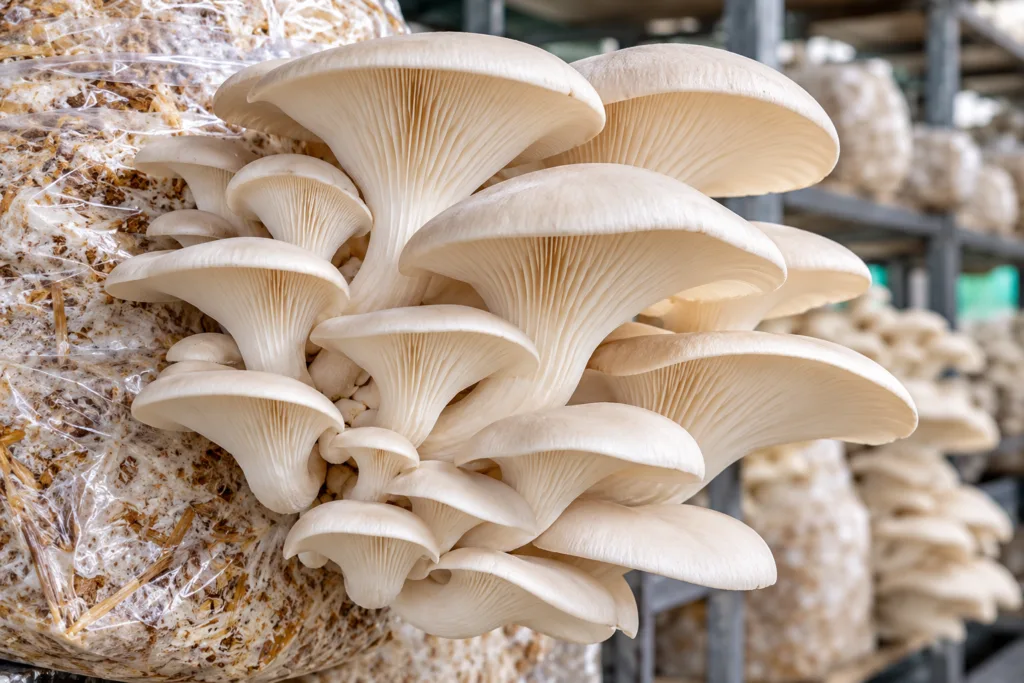
How to Start a Mushroom Farming Business in India
Starting a mushroom farming business in India requires a systematic approach, combining biological knowledge with sound business planning. The diverse climatic zones of India allow for the cultivation of various species, including Button mushrooms (Agaricus bisporus), Oyster mushrooms (Pleurotus ostreatus), Milky mushrooms (Calocybe indica), and Paddy Straw mushrooms (Volvariella volvacea).
Step 1: Choose the Right Mushroom Species
Your choice of species should depend on your local climate, market demand, and infrastructure. Button mushrooms require cooler temperatures (14-22°C), making them ideal for northern states or air-conditioned units. Oyster and Milky mushrooms thrive in warmer, humid climates (25-35°C), making them highly suitable for southern and coastal regions.
Step 2: Procure Quality Spawn
Spawn is the equivalent of seed in fungal cultivation. It consists of sterilized cereal grains (like wheat, sorghum, or millet) fully colonized by pure fungal mycelium. It is critical to source certified, disease-free spawn from reputed agricultural universities or commercial laboratories.
Step 3: Substrate Preparation and Sterilization
The substrate provides the physical support and nutrients required for growth. For button mushrooms, a complex compost is prepared using wheat/paddy straw, gypsum, chicken manure, and urea over a 20-30 day composting cycle. For oyster mushrooms, paddy straw is chopped, soaked in water, and sterilized using steam or chemical pasteurization to eliminate competitive molds and pathogens.
Step 4: Spawning and Incubation
Once the substrate cools down to room temperature, spawn is mixed thoroughly with it (spawning). The inoculated substrate is packed into polypropylene bags or trays and kept in a dark, warm room (spawn-running room) to allow the mycelium to colonize the substrate completely.
Step 5: Casing (Specific to Button Mushrooms)
After the mycelial run is complete, a 3-4 cm thick layer of pasteurized soil, peat moss, or well-rotted cow dung mixed with coco peat (casing soil) is applied over the compost. This layer retains moisture, provides structural support, and induces the transition from vegetative mycelial growth to reproductive fruiting body formation.
Step 6: Cropping and Harvesting
By altering environmental conditions (lowering temperature, increasing fresh air, and maintaining 85-90% relative humidity), the mycelium begins to form tiny pinheads. These rapidly develop into mature mushrooms, which are harvested by gently twisting them from the bed.
How Much Money is Needed to Start a Mushroom Farm?
The initial capital investment required for a mushroom farm depends heavily on the scale of operation and the level of environmental control. Mushroom farming can be categorized into three scales:
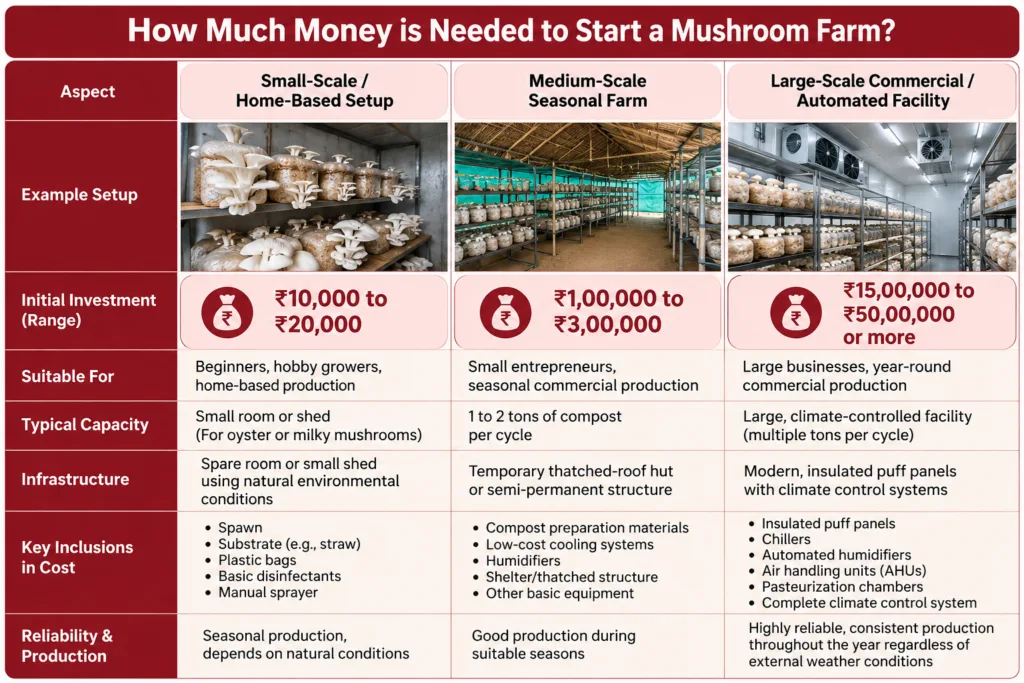
- Small-Scale / Home-Based Setup: If you are starting in a spare room or a small shed using natural environmental conditions (mainly for oyster or milky mushrooms), you can start with an investment of 10,000 to 20,000. This covers the cost of spawn, substrate, plastic bags, basic disinfectants, and a manual sprayer.
- Medium-Scale Seasonal Farm: Setting up a temporary thatched-roof hut or a semi-permanent structure with a capacity of 1 to 2 tons of compost per cycle requires around 1,00,000 to 3,00,000. This budget includes low-cost cooling systems, humidifiers, and compost preparation materials.
- Large-Scale Commercial / Automated Facility: A modern, year-round, climate-controlled facility equipped with insulated puff panels, chillers, automated humidifiers, air handling units (AHUs), and pasteurization chambers requires an investment ranging from 15,00,000 to 50,00,000 or more. This setup is highly reliable and ensures consistent production regardless of external weather conditions.
Is a Mushroom Farm Profitable?
Yes, mushroom farming is highly profitable when managed with proper hygiene and market linkages. The high profitability stems from the fact that the primary raw materials (agricultural waste like straw and sawdust) are extremely cheap and abundant. Furthermore, mushrooms have a very short crop cycle compared to traditional agricultural crops, allowing for multiple harvests (flushes) throughout the year.
A well-managed oyster mushroom farm can yield a net profit margin of 30% to 50%. For button mushrooms, despite higher initial setups and energy costs for climate control, the high volume of demand in urban markets ensures excellent returns on investment (ROI) within 2 to 3 years of operation.
How Much Does 1kg of Mushroom Cost?
The market price of mushrooms varies significantly based on the species, quality, freshness, and geographic location. Below is a general price breakdown in the Indian retail and wholesale markets:
| Mushroom Species | Wholesale Price (per kg) | Retail Price (per kg) |
|---|---|---|
| Button Mushroom (Agaricus bisporus) | 100 – 140 | 180 – 260 |
| Oyster Mushroom (Pleurotus ostreatus) | 80 – 120 | 150 – 220 |
| Milky Mushroom (Calocybe indica) | 120 – 160 | 200 – 300 |
| Shiitake Mushroom (Lentinula edodes) | 400 – 700 | 1,000 – 2,000 |
Exotic and medicinal mushrooms like Shiitake, Ganoderma (Reishi), and Lion’s Mane command premium prices due to their therapeutic properties and specialized growth requirements.
How to Grow Button Mushroom at Home?
Growing button mushrooms at home is an engaging educational activity and a great way to secure fresh, organic produce. Follow these steps for a successful home-grow setup:
- Procure a Growing Kit or Prepared Compost: For beginners, purchasing pre-spawned and fully colonized compost bags is highly recommended. If preparing from scratch, mix sterilized commercial button compost with high-quality spawn in a clean plastic tray.
- Maintain the Incubation Phase: Keep the tray in a dark room at a temperature of 22-25°C. Cover the tray with a clean, damp newspaper to maintain humidity. Within 15-20 days, a white, cottony web of mycelium will completely cover the compost.
- Apply the Casing Layer: Once the mycelium has run through the compost, apply a 3 cm layer of pasteurized casing soil (mix equal parts of coco peat and garden soil, boiled in water to sterilize, then cooled). Keep this casing layer moist by misting it gently with water twice a day.
- Induce Fruiting: Move the tray to a cooler area (14-18°C) with indirect light and good ventilation. The drop in temperature and introduction of fresh air signal the mycelium to transition to the fruiting stage.
- Harvest: Within 10-14 days after casing, small white pinheads will appear. Harvest them when the caps are firm and mature, just before the veil underneath the cap opens up.
How Much Mushroom Can Grow in 1 kg of Seeds (Spawn)?
In mushroom cultivation, yield is scientifically calculated using “Biological Efficiency” (BE). Biological efficiency is the ratio of the weight of fresh mushrooms harvested to the dry weight of the substrate used. The amount of mushrooms harvested per kilogram of spawn depends on the species and the quality of the substrate:
- Button Mushrooms: 1 kg of spawn is typically used to inoculate 80 to 100 kg of wet compost. Under optimal conditions, this ratio yields approximately 15 to 22 kg of fresh button mushrooms.
- Oyster Mushrooms: Oyster mushrooms have a very high biological efficiency (often reaching 80% to 100%). 1 kg of spawn is sufficient for 10 to 12 bags of substrate (each containing roughly 1 kg of dry straw). This setup can yield 10 to 12 kg of fresh oyster mushrooms across 2 to 3 harvesting flushes.
Is Mushroom Farming Legal in India?
Yes, mushroom farming is entirely legal and highly encouraged by the Government of India. The government classifies mushroom cultivation as an agricultural activity, making the income generated from it eligible for tax exemptions under Section 10(1) of the Income Tax Act, subject to specific state-level regulations.
To boost production, the National Horticulture Board (NHB), NABARD, and the Ministry of Agriculture offer financial assistance, training, and subsidies ranging from 40% to 50% of the total project cost for setting up commercial cultivation units, compost preparation facilities, and spawn production laboratories.
How Long Does a Button Mushroom Take to Grow?
The cultivation cycle of a button mushroom is highly structured, taking approximately 60 to 80 days from the initial day of spawning to the final harvest. The timeline is broken down into the following distinct biological phases:
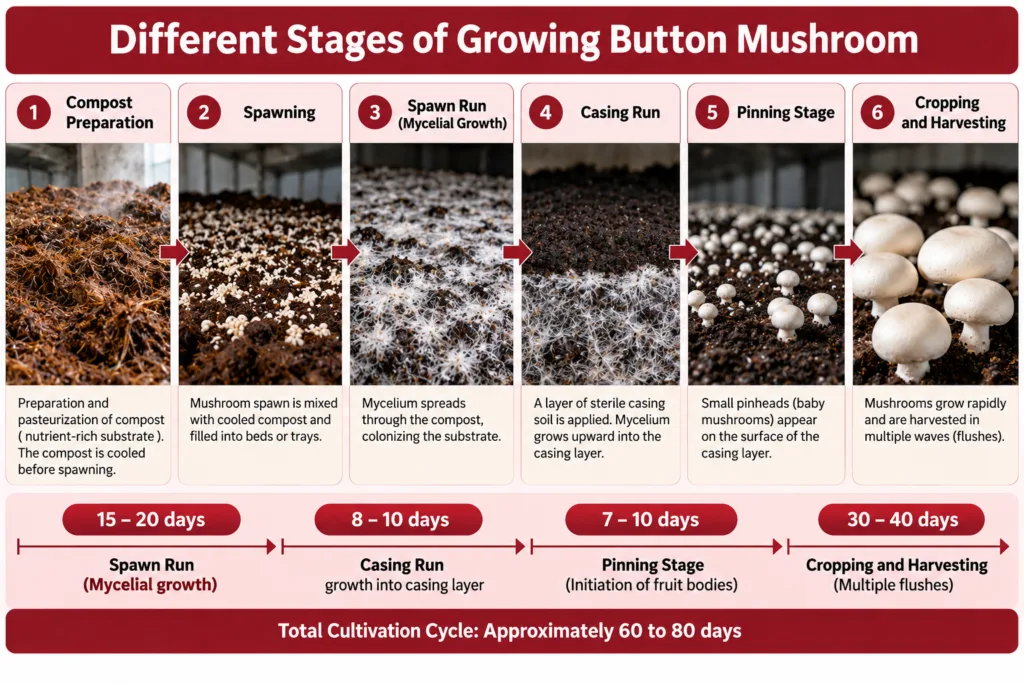
- Spawn Run (Mycelial growth): 15 to 20 days. The mycelium spreads through the compost.
- Casing Run: 8 to 10 days. The mycelium grows upward into the casing layer.
- Pinning Stage (Initiation of fruit bodies): 7 to 10 days. Tiny pinheads appear on the surface of the casing.
- Cropping and Harvesting: 30 to 40 days. Mushrooms mature rapidly and are harvested in multiple weekly waves called “flushes.”
Which Mushroom is 1 Lakh Per Kg?
The mushroom that commands a price of nearly 1 Lakh (or more) per kilogram is the Guchchi mushroom (scientifically known as Morchella esculenta, commonly called the Morel mushroom).
Guchchi mushrooms grow wild in the high-altitude coniferous forests of the Himalayas, particularly in regions of Jammu & Kashmir and Himachal Pradesh. They cannot be easily cultivated under artificial commercial conditions due to their complex symbiotic relationship with forest trees and soil microbiota. Because they must be painstakingly hand-collected by local villagers during the spring thaw, their extreme rarity, rich earthy flavor, and medicinal properties drive their market value to astronomical heights, often reaching 30,000 to 1,00,000 per dry kilogram.
Another premium medicinal fungus is Yartsa Gunbu (Ophiocordyceps sinensis), also known as the Himalayan Caterpillar Fungus, which can fetch up to 10 to 15 Lakhs per kg in international markets.
What are the Disadvantages of Mushroom Farming?
While mushroom farming is highly lucrative, it is a demanding biological process that comes with several distinct challenges and disadvantages:
- High Susceptibility to Contamination: Fungal substrates are highly nutritious media that can easily attract competitive molds (such as green mold, Trichoderma), bacteria, and viruses. A minor lapse in hygiene can ruin an entire batch.
- Short Shelf Life: Fresh mushrooms have a high water content (85-90%) and lack a protective outer skin. They spoil within 24 to 48 hours at room temperature, requiring immediate cold storage, canning, or drying infrastructure.
- Strict Environmental Requirements: Cultivating high-yield varieties like button mushrooms requires precise control of temperature, humidity, and CO2 levels. Power outages or equipment failure can lead to crop failure.
- Health and Respiratory Risks: Fungal spores, particularly from oyster mushrooms, can cause allergic respiratory issues in workers. Prolonged exposure without proper personal protective equipment (PPE) can lead to a condition known as “Mushroom Worker’s Lung” (extrinsic allergic alveolitis).
Frequently Asked Questions (FAQs)
Can I start mushroom farming without any formal training?
While it is possible to start small using online guides, formal training from institutes like the ICAR-Directorate of Mushroom Research (DMR) or state agricultural universities is highly recommended. Training helps you understand pasteurization, disease management, and climate control, which drastically reduces the risk of crop failure.
What is the best substrate for growing oyster mushrooms?
Paddy straw and wheat straw are the best and most widely used substrates for oyster mushrooms due to their high cellulose and lignin content. However, they can also be grown on cotton waste, sugarcane bagasse, and dry leaves.
How do you control pests and diseases in a mushroom house?
Disease control in mushroom farming relies heavily on prevention rather than cure. Maintaining strict hygiene, pasteurizing the substrate thoroughly, filtering incoming air, and sanitizing tools and hands are the most effective ways to prevent pest infestations and mold growth.
Are there any government subsidies available for mushroom farming in India?
Yes, government bodies like NHB and NABARD offer subsidies up to 40-50% of the project cost for setting up integrated mushroom units, compost production units, and cold chain infrastructure.
References and Further Reading
- ICAR-Directorate of Mushroom Research (DMR), Solan: dmrsolan.icar.gov.in – The premier institute for mushroom research, training, and development in India.
- National Horticulture Board (NHB): nhb.gov.in – Information on subsidies, guidelines, and project reports for commercial horticulture crops.
- Chang, S. T., & Wasser, S. P. (2012). The Role of Applied Mycology of Mushroom Cultivation in Sustainable Development. Biology and Biotechnology of Fungi.
- Sharma, V. P., & Kumar, S. (2018). Mushroom Cultivation in India: Opportunities and Challenges. Indian Journal of Agricultural Sciences.