
Python programming for Biologist
Unlock the power of Python in biological research with our 15-day Python Programming for Biologists course! Tailored for beginners, this intensive 1-hour daily program equips biologists with essential programming skills to analyze and interpret biological data. From sequence analysis to machine learning, this course bridges biology and computational tools, empowering you to tackle real-world bioinformatics challenges.
Why Join This Course?
Biology-Focused Learning: Explore Python through practical, biology-relevant examples like DNA sequence analysis, protein classification, and gene expression data processing.
Beginner-Friendly: No prior programming experience required—just a passion for biology and a desire to learn!
Hands-On Approach: Each 1-hour session combines concise theory with engaging exercises, ensuring you apply concepts immediately.
Cutting-Edge Tools: Master Python, Biopython, Pandas, NumPy, and scikit-learn to handle modern bioinformatics tasks.
Build a Machine Learning Model: By the end, create a simple model to classify proteins, a valuable skill for research and industry.
.
.

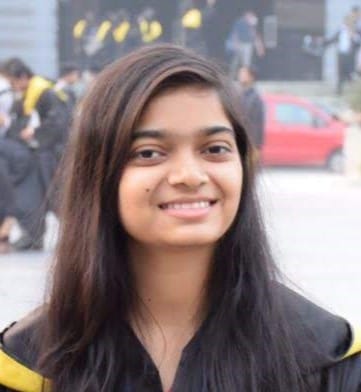
Educator
Shivani Singh

Difficulty
Beginner to Expert

Mode
Live Session

Language
English
Python Programming
Mode - Live Session
Certificate Provided
Hours 15 Hours
Time 7:00 PM IST
Course Start Date 22 July
Last date 20 July
Course Benefits
Practical Skills: Gain hands-on experience with tools used in genomics, proteomics, and bioinformatics.
Flexible Learning: Daily 1-hour sessions fit busy schedules, with exercises you can revisit anytime.
Real-World Applications: Learn to process biological datasets and build models for tasks like protein function prediction.
Future-Ready: Acquire in-demand skills for academia, biotech, and pharmaceutical industries.
Python programming for Biologist
Day-1
Introduction to Python for Biologists
Welcome and class introductions
Overview of the 15-day training program
Why Python for biologists? (e.g., bioinformatics, data analysis)
Python in biology: applications (e.g., genomics, protein analysis)
Python vs. other languages (R, Perl, MATLAB) with biology examples
Day-2
Setting Up Python and Writing First Code
Installing Python and Anaconda for easy package management
Introduction to Jupyter Notebook and VS Code for coding
Writing and running “Hello World” using Python’s print function
Exploring variables, data types (int, float, string), and basic expressions
Hands-on: Simple calculations (e.g., DNA base pair counts)
Day-3
Working with Strings and Basic Operations
String operations: concatenation, slicing, and formatting
Biology example: Manipulating DNA/RNA sequences as strings
Arithmetic, relational, and logical operations in Python
Hands-on: String quiz and calculating GC content of DNA
Introduction to lists: creating and accessing elements
Day-4
Lists, Tuples, and Data Structures
Lists: operations (append, remove, sort) with biology examples (e.g., gene lists)
Tuples: immutable sequences for fixed data (e.g., codon tables)
Hands-on: List/tuple quiz and exercises (e.g., storing sequence lengths)
Overview of Python data structures for biological data
Day-5
Dictionaries and Sets for Biological Data
Dictionaries: key-value pairs for storing data (e.g., gene annotations)
Sets: unique elements for tasks like unique amino acids
Hands-on: Exercises with dictionaries (e.g., mapping codons to amino acids)
Practice quiz on sets and dictionaries with biology context
Day-6
Control Flow in Python
Conditional statements: if, elif, else with biology examples
Introduction to loops: for and while loops
Hands-on: Filtering sequences based on length or content
Using else with loops for biological data processing
Day-7
Functions and Modular Programming
Defining and calling functions in Python
Writing functions for biological tasks (e.g., calculating molecular weight)
Hands-on: Writing functions to process sequence data
Introduction to objects and classes with simple biology examples
Day-8
File Handling and Introduction to Pandas
Reading and writing files using open (e.g., FASTA files)
Introduction to Pandas for biological data analysis
Loading and exploring datasets (e.g., gene expression data)
Hands-on: Reading a CSV file and basic Pandas operations
Day-9
NumPy for Scientific Computing
Introduction to NumPy for numerical operations
One- and two-dimensional NumPy arrays for biological data
Basic matrix operations (e.g., for sequence alignment scores)
Hands-on: NumPy exercises with biology data (e.g., protein feature arrays)
Day-10
Biopython for Sequence Analysis
Introduction to Biopython and its role in bioinformatics
Working with sequence objects (DNA, RNA, protein)
Sequence operations: slicing, concatenation, case conversion
Hands-on: Reverse complements, transcription, and translation
Day-11
Introduction to Machine Learning for Biologists
Overview of machine learning in biology (e.g., protein classification)
Introduction to scikit-learn for simple ML tasks
Understanding the protein classification problem (e.g., enzyme vs. non-enzyme)
Hands-on: Loading sample protein sequences and labels
Day-12
Extracting Features from Protein Sequences
Using Biopython’s ProteinAnalysis to compute features (e.g., molecular weight, aromaticity)
Hands-on: Extracting features from protein sequences
Storing features in NumPy arrays for machine learning
Brief overview of feature scaling and its importance
Day-13
Preparing Data for Machine Learning
Splitting data into training and testing sets using scikit-learn
Scaling features with StandardScaler for better model performance
Hands-on: Preparing a dataset with protein features and labels
Visualizing data with simple matplotlib or Pandas plots
Day-14
Building a Simple Machine Learning Model
Introduction to logistic regression for binary classification
Hands-on: Training a logistic regression model on protein features
Evaluating model accuracy on training and test sets
Discussion: What does the model learn from protein features?
Day-15
Predicting and Applying Machine Learning
Hands-on: Predicting classes for new protein sequences
Interpreting predictions (Positive vs. Negative class)
Saving and loading models with scikit-learn
Wrap-up: Real-world applications and resources for further learning
- Project & Quiz: End-to-end ML pipeline and Review quiz

Shivani Singh is a PhD scholar in Computational Biology & Bioinformatics at Sharda University, currently working as a Bioinformatics Educator. She specializes in protein structure prediction, molecular docking, and AI-driven drug repurposing. With an MSc in Bioinformatics, she has conducted hands-on workshops in molecular docking, MD simulations, and bioinformatics pipelines. Her teaching combines research experience with practical skills in structural bioinformatics, cheminformatics, and machine learning for life sciences.
Reviews

Kinnari Makwana
I learned how to use python for data retrieval, analysis and many more things.
Animesh Ray
I got a chance to know about application of python in life sciences
Sujal pawar
I learnBiopython and data analysis
ANASWARA C
I learned one of the main programne
Certificate

FAQ
Session Joining link will be send to your register email on the day of session start you can join session by clicking joining link.
All Session are evening sessions time of session is between 7:00 to 8:00 PM IST.
Please read refund policy in refund policy section page.
No, any short Prerequisites knowledge you required to join the course.